


Conversations
Thomas Lukaszuk – Forever Canada
Gene Kosowan
May, 2026
When vocal Alberta radicals started bleating about separating from the rest of the nation, St. Albert resident and former Deputy Premier Thomas Lukaszuk decided to assemble a countervailing movement.
“Where there’s a pressing issue, you look around to see if somebody’s going to do it and nobody does, the best person to do it is you, so I did,” said Lukaszuk about one reason why he launched his Forever Canadian campaign last summer. It’s also emblematic of his unwavering patriotism towards Canada, a country that welcomed Lukaszuk and his parents from communist Poland when he was only 12 years old.
“I cannot imagine not being Canadian. I cherish my Canadian passport. The day I became a Canadian citizen became one of the biggest highlights in my life.”
added Lukaszuk, now 57.
Grassroots Movement
Lukaszuk’s grassroots movement has garnered quite a few highlights of its own in the past several months, including the delivery of a petition that met stringent requirements set in the province’s Citizen Initiative Act. His team had only 90 days to collect a minimum of 294,000 signatures supporting the question: “Do you agree that Alberta should remain in Canada?”
Criss-crossing the province, Lukaszuk and some 6,000 volunteers managed to sign up a staggering 404,293 Albertans by October. The results set a record for provincial citizen-driven petitions, with St. Albert contributing the most signatures per capita.
Since then, Premier Danielle Smith has struck up a bipartisan committee to review the petition and assess its likelihood of becoming a referendum question in October, or being put to a legislative vote. Lukaszuk is pushing for Smith to choose the latter.
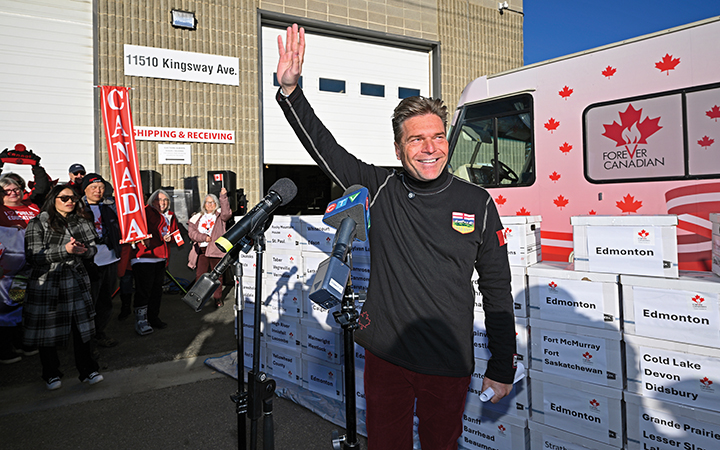
“I gave her that safety valve by saying, ‘Look that’s why we elect MLAs, that’s why we pay them, that’s why they swore the Oath of Allegiance to the Crown to become MLAs,” he said.
“They should be dealing with this issue. This is the most important issue that any MLA will ever deal with in the history of this province: Alberta staying in Canada. They should vote on it and declare their positions. And we should live with the outcome of that vote and focus on solving real problems.”
Separatist Opposition
Meanwhile, Lukaszuk is keeping an eye on what his separatist opposition is up to. He pegs the number of Albertans favouring separatism at less than 30 percent, on par with what most polls are recording these days. But that hasn’t dissuaded dissenters from making a great deal of noise and headlines, whether they’re compelled to continuously rail against what they deem as punitive policies from Ottawa, or are encouraged by US President Donald Trump’s taunts of Canada becoming a 51st state.
Alberta has no shortage of pockets of support for sovereignty. Some separatists are members of the Republican Party of Alberta, which barely made a scratch in three byelections last August. Far more influential has been Take Back Alberta, a Christian nationalist collective bullish on independence, which carved considerable inroads into the UCP, including ousting Jason Kenney, Smith’s predecessor, and taking over control of the party’s board of directors.
But the biggest source of separatist momentum has come from the Alberta Prosperity Project, a group supporting a petition campaign of its own via its Free Alberta movement. Near the end of March, the APP received enough signatures—based around the question: “Do you agree that the province of Alberta should cease to be a part of Canada to become an independent state?”—to be considered for a referendum.
Fewer Hoops
However, the APP had fewer hoops to jump through than the Lukaszyk campaign, needing to collect only 177,000 signatures within a 120-day window that officially closes May 2. They have Smith’s government to thank for the relaxation of rules made two months after Lukaszuk’s campaign had concluded.
The government also inserted a clause barring Elections Alberta from challenging a referendum question’s constitutional legitimacy. That was good news for the APP, whose campaign initially stalled when a court ruling declared its question to be unconstitutional.
To Lukaszuk, the changes demonstrated that Smith—who’s frequently declared herself to be a federalist— obligingly yields to a far-right separatist faction in her UCP base that includes 18 MLAs, eight of whom are in her cabinet. “She’s giving them red meat,” retorted Lukaszuk. “While the hockey game is on, she’s changing the rules, and adding periods and changing the sizes of nets. She’s hell-bent on having the referendum on separatism and we don’t need to have one.”
So far, the referenda list slated for a public vote Oct. 19 doesn’t include a separatist question. But the rest of the ballot tackles related subject matter like immigration control, determining which residents can access public programs like education and healthcare, abolishing the Senate, and prioritizing provincial laws over federal equivalents.
Contentious Topics
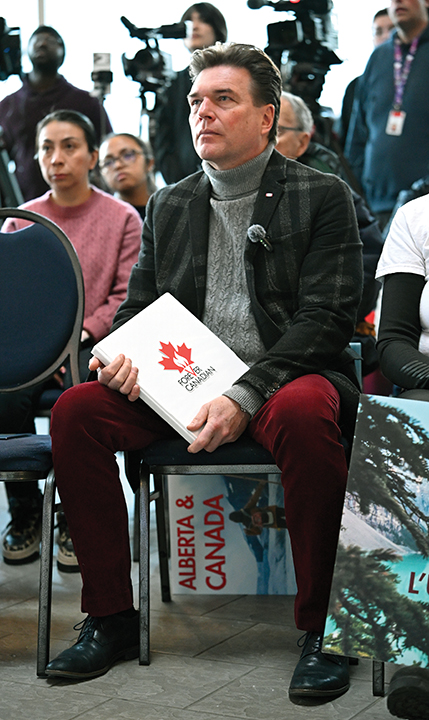
Lukaszuk claimed that during his campaign, none of those contentious topics was top of mind to folks he chatted with across Alberta. “I spoke with separatists and supporters, and not one has ever told me that we should now withhold health care and education services to immigrants,” he recalled. “It’s a non-issue. But in Smith’s political base, there is a fragment of UCP supporters who honestly believe in that.”
The APP evidently has plenty to say about immigration, much of it contained in its Value of Freedom document. One section recommends that an independent government would impose a strict immigration policy that favours “our like-minded Canadian brothers and sisters,” because they would “fit easily into the Albertan culture.” There’s also a stipulation that criminally-charged non-citizens would face “automatic deportation, regardless of sentence length.”
And while the bulk of the Value of Freedom tome dedicates itself towards economic justifications for independence, it also strongly advocates for Alberta’s own taxation, pension, and police systems, as well as a sovereign constitution. Other APP position papers call for the end of bilingualism, freedom from the “constraints of the existing climate agenda,” and constitutional protection of the “Judeo-Christian foundation.”
Caucasian Christians
“I can only imagine what type of government we will have based on what they are saying,” ruefully noted Lukaszuk. “The proponents of separatism, like Bruce McAllister, who is the Premier’s chief of staff for southern Alberta, said that this new Alberta should only allow people into this new country that are of Judeo-Christian backgrounds, which means Caucasian Christians. It’s a very skittish way of saying we don’t want any Muslims, we don’t want anybody who isn’t white.”
That the separatist blueprint subtly addresses race and religion disturbs Lukaszuk, who points out that a unilingual Alberta republic would be detrimental to minority citizens. “They were very clear that they envision a unilingual province, which means the Francophone community would lose all of their language rights, and all of us who speak other languages would not be supported,” he added. “The Charter of Rights and Freedoms that we all have as Canadians would no longer apply to us.”
Also no longer applicable, according to Lukaszuk, would be the economic benefits to Alberta, should the cord be cut. Until other countries recognize Alberta as an independent nation, he believes agricultural and energy products would lose access to outside markets and vital ports, many of which would take years to negotiate.
“In the meantime, some of these five million Albertans would probably pack up and leave, while others would be stuck in this no man’s land,” he added. “And let’s be honest, they’re not pushing for separatism; they know this would become the 51st state almost immediately.”
Canadian Precedent
So far, separatists and their opponents have held several rallies across the province over the past several months. And while there have been no reports of violence at any of these events, Lukaszuk warned of the possibility that tensions could percolate, citing a Canadian precedent from the 1970s.
“Why put us through this divisive process for a referendum and cause further divisions in this province where family members won’t even talk to each other anymore?” he asked. “We saw how this can spin out of control. When separatists in Quebec were planning separatism during the FLQ crisis, nobody anticipated kidnappings and murders, but things tend to get out of control when people get overly emotional. Some people can simply go one step too far.”
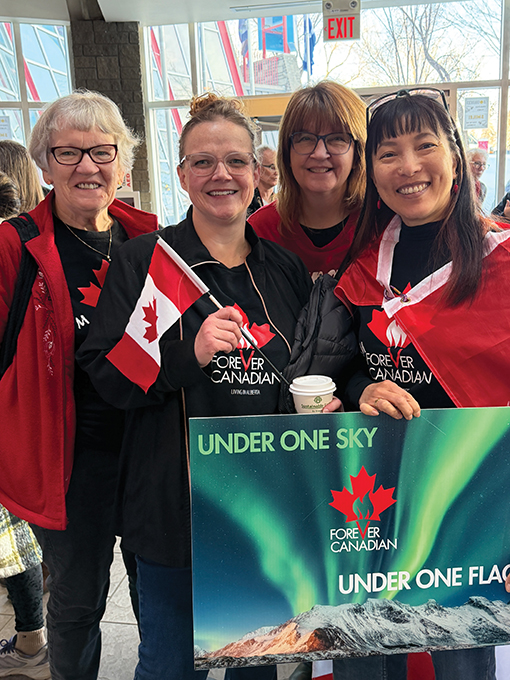
As Lukaszuk and his supporters await what type of referendum question will appear on the fall ballot, the Forever Canadian organization is shifting gears to focus on more community outreach. In March, it struck a partnership with Association Canadienne-française de l’Alberta, which represents the province’s Francophone community.
Promotional Campaign
Volunteers are slated to circulate among the public to sign up on Forever Canadian’s website to receive additional information about the cause and updates on forthcoming events. There’s also a promotional campaign in the works to dispatch facts and figures to counteract what Lukaszuk believes is a plethora of misinformation surrounding separation and what the province would miss if it goes independent.
“I hope that we start focusing on what really matters and what’s important,” he said.
“And I really hope that we remind ourselves of what made us normal. And what made us the most desirable province in the most desirable country in the world. And remind ourselves of our compassion and our core values, which meant helping each other, welcoming people, helping them stand on their own feet and become contributing Albertans.”


More Conversations


Join the T8N E-Newsletter