

Conversations
The high cost of dying
Tom Murray
March, 2026
When my mom died in the spring of 2009 it was a bit of a jolt.
The suddenness left me stunned. Soon after I was sitting in the office of a solicitous funeral director in Edmonton discussing next steps. My mom, like my dad, had been very blunt about this matter. They both wanted to be cremated; no expensive funeral, no casket, no service.
The director brought out several types of receptacles for my mom’s remains. Beautifully designed urns, gold embossed boxes. All at alarmingly expensive prices for someone on a freelancer’s salary. The director politely pressed; I just as politely refused until finally he relented and noted that my mom’s ashes would be kept in a very modest receptacle, in this case a black plastic box.
Absent direct instructions from my parents I would have been unsure how to proceed, and torn on how much I was supposed to spend. Enough for a dignified send off, or a lavish celebration of life? When looking at the various options I was shocked at just how expensive it was to die.
“The shock really comes from not knowing as opposed to any specific dollar amount. It’s just the fact that this isn’t something you do every day, and it’s our responsibility to make sure that people are making the correct choices and showing the value of it.”
notes Eden Tourangeau, funeral director at Arbor Memorial on Edmonton’s south side.
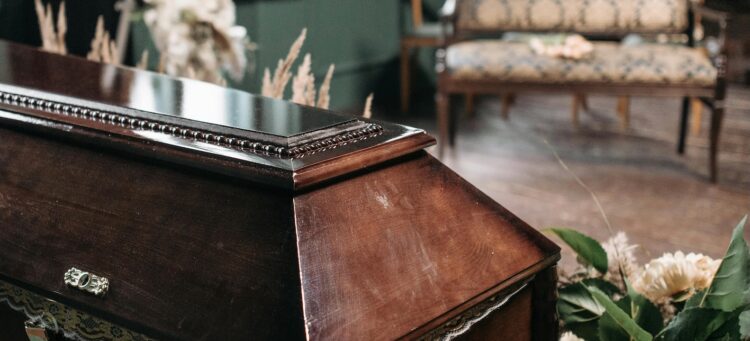
Check around the internet and you’ll see varying estimates on the costs associated with death. Senior’s Choice estimates that the average funeral will cost $7,793, with larger funerals reaching as high as $17,000 and $14,000 for a cremation. The more you add the more it goes up. It starts from something as small as a death certificate, which costs around $20 a copy, to the casket itself, which can cost upwards of $5,000 or more.
When I requested cremation for my mom in 2009 the cost came to somewhere around $1,200. Now, according to Canadian Funerals Online you’re looking at $1,500 to $3,500 for just the cremation, and that doesn’t include the cremation fee, which now runs somewhere between $400 and $600. If you want a memorial service included you’ll have to dig a little deeper for $3,000 to $6,000. The urns that I turned down one by one as they were presented to me? I’ve mercifully forgotten the costs back then, but now you’ll find a range between $100 and over $500.
It all adds up, including the option for an urn niche in a mausoleum if you’re not scattering them. Both of my parents have gotten to see a large portion of Europe in ash form and have even been forever mingled with noted French pop singer Serge Gainsbourg at the Montparnasse Cemetery in Paris. It’s cheaper, and makes for more fun overseas visits where I can stop by and pay my respects to all three as I sweep away the butts of Gitanes cigarettes from the grave.
Tourangeau notes that while that kind of thing may work for some, for others there’s the need for closure in a more formal sense.
“It’s important to get together and grieve and acknowledge that this person mattered, however that may look,” he says. “Whether it’s something the family does on their own in a very private and small manner, or whether it’s something where families have the faith-based church service with the casket, pallbearers, cemetery and things like that. What we do is really for the living.”
So – let’s get back into the nitty gritty of it and see what the cost is for the living.
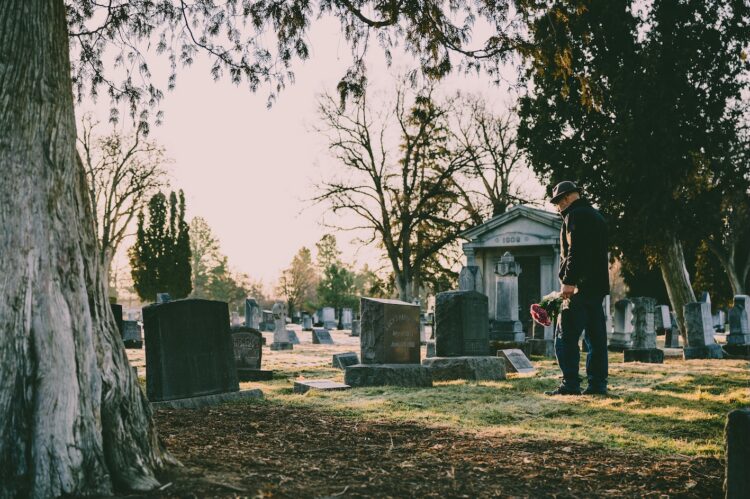
A breakdown of funeral costs involves a number of different elements. If we’re going with the all out, a headstone of plaque at $3,157, coffin around $2,869, venue $1,686. Flowers? $1,685. Catering averages out to $1,320. These are all taken from the Senior’s Choice report of 2024, and they’re simply average costs.
Other potential costs include an officiant, embalming, invitations and death notices. There are burial fees, fees for the plot itself, and fees for the funeral director. You can see how funeral costs can spiral from a few thousand to the equivalent of a down payment on a small house. Insurance can help with this, of course, and there’s also the Canadian Pension Plan death benefit, which pays out a lump sum of $2,500.
Still, even with financial assistance, the figures can be daunting, especially with rising costs. The same hit that we take at the grocery store, in rent and mortgage and so much else, can also be seen in funeral expenses. This has caused a number of people to look into prepaid funerals, where current prices can be locked in for a future service. Tourangeau acknowledges that expense is an issue for those already feeling the pinch, with inflation being a prime driver affecting every single cost in a funeral service. There has been pushback from the industry; the Funeral Service Association of Canada are agitating for an increase to the CPP death benefit, calling it “woefully inadequate.”
There’s also the question of unethical practices, especially funeral homes exploiting personal grief to upsell. Former Edmontonian and now Calgarian Tamara Roberts remembers her mother being roped into a funeral payment plan of $100 a month for 10 years, with a $4,000 casket on a different payment plan. This was in B.C. It was an over-the-top service that would have better suited a small folk concert.
“Our family is tiny, so [the size of the room] was insane and a little hilarious,” she recalls. “There was a limo pickup and drop-off, room for 200, a reception room and slide show. For nine of us.”
Edmontonian Jason Colvin remembers discussing next steps when his father passed in a public place. One of the professionals in an adjacent industry took Colvin aside to dispense a few quick words of advice.
“I was told to not take the first offer that comes over the phone,” he says. “They will try to gouge you. Get at least three quotes, because these people are trained to sound sympathetic, but they are not your friends. Boy, was she ever right. There was a $5,000 difference. I called three places and when I told them that I was gathering quotes the prices immediately went down.”
Sounds like the Wild West out there, but there is a board that oversees the industry. The Alberta Funeral Services Regulatory Board sets licensing standards and also involves itself in industry education requirements. A little wary of the company you’re dealing with? They’re the ones that deal with complaints and disciplinary hearings.
In The Big Lebowski, when Walter (John Goodman) and the Dude (Jeff Bridges) walk away from a funeral home with the ashes of their pal Donnie (Steve Buscemi) it was in a fast food container. That’s not an actual option in the real world, but as Tourangeau points out, it does mirror certain current vogues.
“The biggest trend has been the increase in cremation,” he says. “People find that much more convenient so they’ve been doing that a lot. We’re also seeing a lot of families kind of go away from the traditional type of services, having life celebrations or what we would call an afternoon or an evening to remember. Some people will opt for having pizza and watching the deceased’s favourite movie. So, something a little less formal, but still within that realm of celebrating and honoring and remembering a life.”
That’s the crux of it. A funeral can cost as much as you like, or as little as you like. The Senior’s Choice Funeral Report opines that the average cost of a basic funeral involving burial or cremation, with officiant and funeral director, is $4,037. That’s without all of the extras, including extravagant flower arrangements, hospitality for the attendees, a headstone or plaque. It all depends on what you consider to be important.
Will it be a private matter involving only a few people, or a friend and family gathering that needs the use of the chapel? Will you need an ornate headstone, or to rent a spot in the cemetery for your loved one’s ashes? Tourangeau notes that for many people these are questions that only really come up in the moment, and funeral directors are there to shepherd their clients through the grief to find what would be the best option for them.
“We’re here to help in a professional rather than an emotional manner for the families,” he says,” so we just make sure that we go along at a pace that they’re comfortable with. We don’t judge. We just make sure that we give the family every option and allow them the time and the space to make decisions that are best suited to their needs.”


More Conversations


Join the T8N E-Newsletter