

Then & Now
School Names 2026
May, 2026
The vast majority of schools in St. Albert are named after individuals and families who not only helped foster the community’s development over the decades but have also displayed enviable character traits that inspired their peers. Through their courage, innovation, dedication, and even sense of adventure, these people have indeed helped make St. Albert a better place.
Albert Lacombe Catholic School
Father Albert Lacombe, whose name is synonymous with St. Albert’s history, was known for more than presiding over the original mission in the area. He was highly respected for settling disputes between the Blackfoot and Cree and brokering agreements between First Nations communities and the federal government, from CPR railroad lines to Treaty 8.
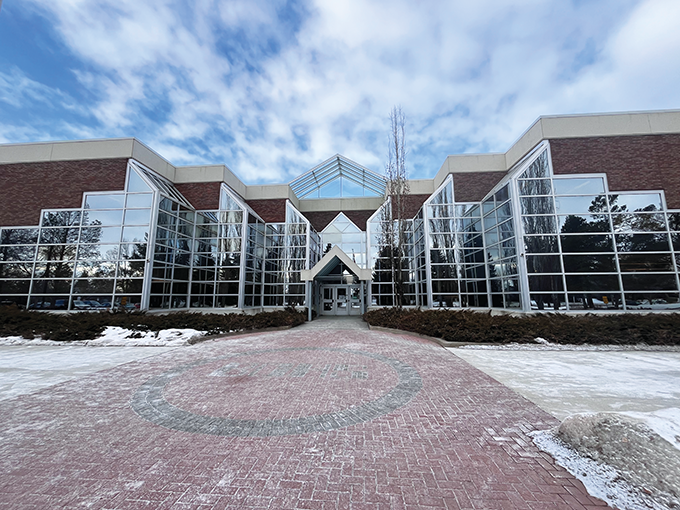
Bellerose Composite High School
The name of the school was decided in a contest, in which the winning entry proposed Octave Bellerose and his family, who settled in St. Albert in 1849. Industrious as farmers and hunters, they also built the area’s first school in 1886.
Bertha Kennedy Catholic School
An educator who taught across Alberta, including several one-room schools that facilitated Grades 1-9 during the 1920s and ’30s, Kennedy is especially lauded for introducing several musical and cultural programs into St. Albert’s Catholic school system.
École Alexandre-Taché
Bishop Alexandre Antonin Taché, the first Archbishop of St. Boniface, administered a territory that covered most of the prairies. In 1861, he declared to Father Albert Lacombe a hilltop site for a mission that would later evolve into St. Albert.
École Sainte Marguerite d’Youville
During the 18th century, Sainte Marguerite founded the Sisters of Charity of Montreal, better known today as the Grey Nuns, recognized as Canada’s first-ever religious community. Her work prompted Pope John Paul II to declare her a saint in 1990.
Elmer S. Gish School
Former country schoolteacher Gish developed school programs for St. Albert and was even responsible for establishing Edmonton’s first vocational school. He also became superintendent of this area’s school district in 1970.
J.J. Nearing Catholic Elementary School
Nearing served as a school superintendent for 15 years, starting in 1983. During that time, he helped to guide the transition of St. Albert School District No. 3 to the Greater St. Catholic Regional School District, bringing schools from Legal and Morinville into the fold.
Joseph M. Demko School
A highly-regarded educator after decades of service, Demko is the only person in the city’s history of its public school system to have been a teacher, assistant principal, principal, associate superintendent, superintendent, and trustee.
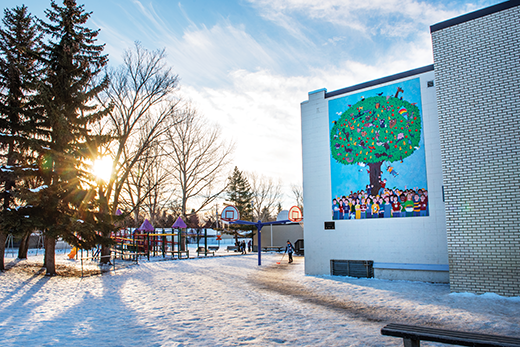
Leo Nickerson Elementary School
Nickerson is recognized for his courage and heroics during a fateful Cub Scouts excursion at Lake Wabamun on July 14, 1961. That day, giant waves from a sudden windstorm swamped the boys swimming in the lake. Nickerson managed to save two boys before he and three other youngsters drowned in the perilous waves.
Lois E. Hole Elementary School
Lois Hole had all the qualities to become one of St. Albert’s most popular figures, largely thanks to the entrepreneurial success of her family’s garden centre enterprise. On top of all that, she was a recognized author, University of Alberta Chancellor, and Lieutenant Governor of Alberta. In education, Hole served as a trustee and chairperson of the Sturgeon School Division.
Lorne Akins Junior High School
Farming pioneer Akins and his family occupied a farm on 240 acres of land on River Lots 47 and 48 that they purchased in 1918. He later became a town councillor, a school trustee, and a member of the Lions Club.
Murielle Martin Elementary School
An innovator of school programs in St. Albert, Martin introduced kindergarten, French immersion, and adult programs to the education system. She was also the only woman to hold the public school district’s assistant superintendent position when she was appointed in 1970.
Neil M. Ross Catholic School
A mayor for three years and a school trustee for six, Ross was also known as a devout Catholic who helped build the grotto at St. Albert Parish and donated a Virgin Mary statue to the church.

Paul Kane High School
One of Canada’s best-known visual artists, Kane made a name for himself documenting the lives of First Nations people in western Canada in sketches and on oil canvases. From buffalo hunts to child rearing, the works are recognized for romanticizing the more noble side of indigenous people.
Richard S. Fowler Catholic Junior High School
Politician and Provincial Court Justice Fowler first served for three terms as St. Albert mayor before jumping to provincial politics in 1989. He also occupied cabinet portfolios that included Municipal Affairs and Native Affairs, and was a Minister of Justice and Attorney General.
Ronald Harvey Elementary School
Besides serving as St. Albert’s mayor for 12 years before leaving office in 1980, Harvey was a strong supporter of establishing a Protestant school board. That board elected him as chair, a position he held while serving as mayor.
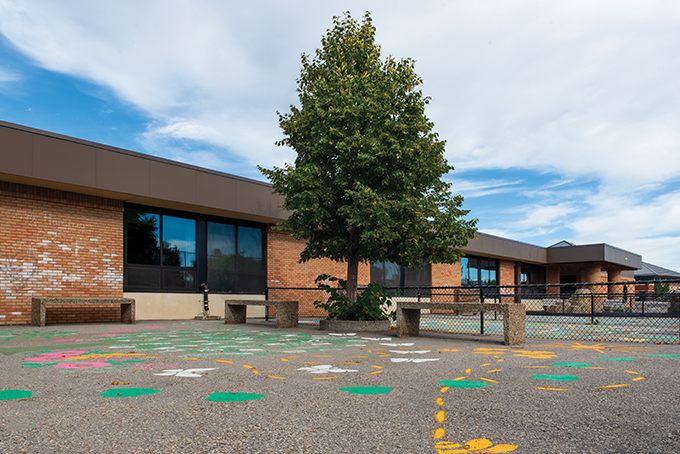
Sir Alexander Mackenzie Elementary School
Scottish fur trader Mackenzie stands tall among Canadian explorers, having been the first European to traverse the continent to reach the shores of the Arctic and Pacific oceans during the latter half of the 18th century.
Sister Alphonse Academy
This institution is named after a Grey Nun who, during the 1860s, became the St. Albert Mission’s first teacher, going so far as to learn Cree to foster closer relations with neighbouring First Nations communities.
St. Gabriel Education Centre
The Centre chose the Archangel Gabriel, who’s best known as a critical messenger, to reflect its mission to deliver education and learning opportunities to its students.
Vincent J. Maloney Catholic Junior High School
This school’s namesake was a former superintendent of the Greater St. Catholic Regional School district whose mandate melded Catholic education with progressive curricula.
William D. Cuts Junior High School
This physician, who served as public school trustee until he died in 1977, has often been recognized as one of St. Albert’s finest residents. Named Citizen of the Year in 1966, Cuts was a founder of organizations that include the St. Albert Lions Club and the St. Albert and District Chamber of Commerce.


More Then & Now
Join the T8N E-Newsletter