
Conversations
Fahrenheit 780
Tom Murray
September, 2025
The Alberta government cranks the heat on what’s allowed in school libraries.
For Toni Samek, the writings of Judy Blume were an important part of growing up.
“I’d say that those were probably the first books I could get access to information that I needed at the time,” says Samek, Professor at the School of Library and Information Studies at the University of Alberta. “Just as important was the sense of privacy, which was so important to me.”
When they first started appearing in the ’60s and ’70s, Blume’s young adult fiction was eagerly snapped up by kids who finally found storylines touching on topics that they themselves were first encountering. Sex, menstruation, masturbation, forbidden subject matter that many parents found uncomfortable discussing. The banning of those books in some U.S. school districts followed a few years later. Little wonder that Samek, who is also Scholar-in-Residence at the Centre for Free Expression at Toronto Metropolitan University, is alarmed at the announced Alberta government guidelines for “age-appropriate” books in the provincial school system.
Graphic Novels
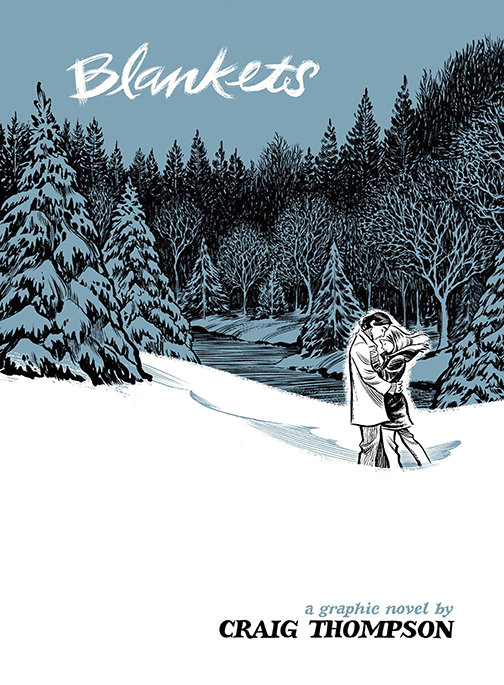
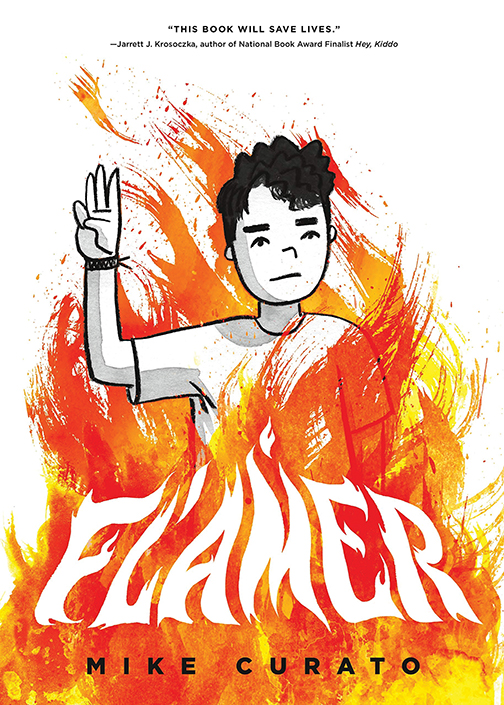
Since the late spring, the four graphic novels that set off this kerfuffle were Gender Queer by Maia Kobabe, Fun Home by Alison Bechdel, Blankets by Craig Thompson and Flamer by Mike Curato. The protagonist of Blankets is straight and questioning his Christian upbringing, but the main characters in the other three graphic novels are 2SLGBTQ+ youths. All four have fallen afoul of the government’s directive that explicit sexual content including masturbation, penetration, and ejaculation, cannot be accessible to students in any grade.

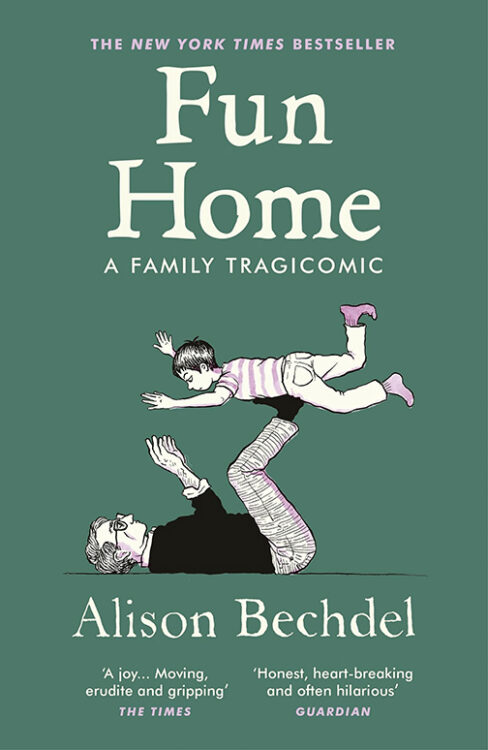
According to Education and Childcare Minister Demetrios Nicolaides at his May press conference where he announced new guidelines and the initial banning from schools, the preliminary approach came from concerned parents. A number of right-wing advocacy groups were quick to celebrate, and a number of skeptics were just as quick to investigate. Connections between the government list and U.S. advocacy groups like Moms for Liberty were drawn by organizations like the Investigative Journalism Foundation.
The government solicited responses to a survey on the question of what is believed acceptable for school library collections. On June 10, that survey was completed and posted online. Turns out that “sixty-one per cent of respondents said they have never been concerned about a book in a school library being inappropriate for a certain age group due to sexually explicit content.”
Despite those results, the government remains adamant in pushing the directive. “I think it’s important that we make sure that young children are exposed to age-appropriate material only and that they’re not exposed to pornographic images early,” noted Premier Danielle Smith during a province-wide radio program a month after the survey’s findings were released.
Porn in Libraries
The government wants school libraries to remove sexually explicit materials by Oct. 1. School boards must also reveal their criteria for reviewing and selecting books by Jan. 1.
“There’s an attempt to scare parents into thinking that there’s porn in libraries,” says Samek. “And there’s this conflating of students from Grade One to Grade 12 with the word children, when, of course, there’s different ages, and kids have the right to full development. School libraries serve a wide range of readers, and it’s about supporting literacy in all its forms, and the free development of personality. So, it seems like a real attack to me, on a feminized profession and a profession that supports free and equitable access to information for everyone.”
Including access to information that would be of use to 2SLGBTQ+ students who might be grappling with their identities. The UCP government is insistent that they aren’t banning books as the removal of such writings will only take place in the school system.
“This was never about erasing particular narratives from school libraries,” Nicolaides said at the May conference. “This is simply about ensuring young students are not exposed to content depicting oral sex, child molestation or other very inappropriate content.”
Critically Acclaimed Books
But St. Albert Public Library CEO Peter Bailey is somewhat skeptical. He also notes that of all the books to remove, Nicolaides has chosen four that are very highly regarded.
“They’re all award-winning, well-reviewed, critically acclaimed books,” he says with some bemusement.
“You know, the right book at the right time for the right person is the key. I don’t think any of my colleagues in school libraries or anywhere would say these four titles are appropriate for elementary school kids. These are young adult, coming of age novels and memoirs appropriate for high school kids and adults. But high school kids, teens are going through a lot, and books are really helpful for young people in getting through the changes that are happening to them as teens.”
Notes Peter Bailey
Bailey and Samek both feel that this all relates as well to the underfunding of school libraries, lamenting the loss of possible educational and mentoring opportunities. Samek, who has been following the controversy in Toronto and keeping track of media coverage, also notes that it’s been getting a great deal of attention in other parts of Canada and the world. For some it’s a matter of concern, for others a test run. Samek wants to see it nipped in the bud as quickly as possible.
“Some of my American colleagues have been sharing their best advice because they’ve been in this fix for some years now,” she says. “There was a concern that this ministerial order was even more extreme than a lot of the examples in the US. So not only has the minister taken us up as the precedent-setting case in Canada, he’s taken it to such an extreme, which, of course, is why it’s getting so much reaction.”
Public Libraries Unaffected
Both Samek and Bailey, who—at this writing—is retiring at the end of August, aren’t against parents taking an interest in what their children are reading. They’re also quick to point out that none of the books singled out by Minister Nicolaides in his May press conference is required reading at any school. As they point out, these books are simply there for young adults to read if they feel so compelled.
The government points out that public libraries will not be affected in any of this, and a call to the St. Albert Public Library verifies this. Three of the four books are available at the library, and there have been no complaints made. But Bailey and Samek see this as along the lines of the thin edge of the wedge, and a direct attack on their chosen profession.
Bailey himself is even amused to see this focus by the government on books, and especially the power of books. How they can inform, but also empower and change perspectives.
“Can you think of a better way of encountering difficult topics and discussing it than with a knowledgeable adult in a great, supportive atmosphere like a school library? I would want my kids to learn about things in that kind of environment, so in a better world we’d have more fully staffed school libraries where expert staff would have the time to really dig into these topics with kids.”
The book blowback continues
Of course you realize, this means war.
If the opponents of Danielle Smith and her government in the great book ban clash of 2025 didn’t outright utter Bugs Bunny’s timeless words, they certainly were thinking it. Rather than fight it out through the media, staff at the Edmonton Public School Board decided to take a different tack, following the school ban directive to the letter.
After all, the ministerial order stated quite clearly: “The school authority must not select for inclusion in a school library, or make available to any children or students in a school library, materials containing explicit sexual content.”
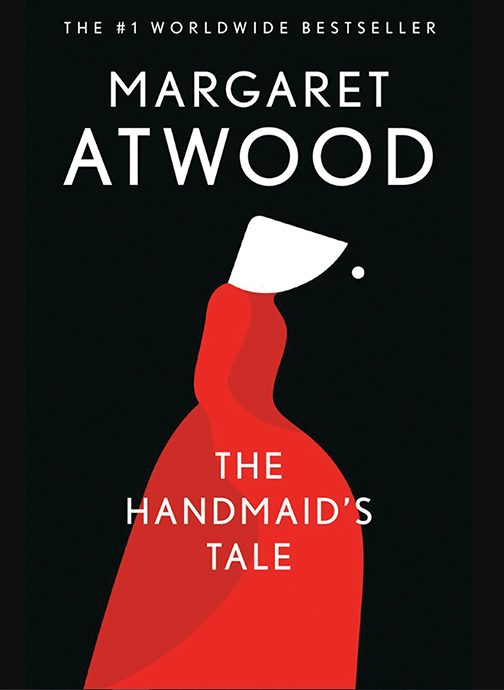
So, they diligently drafted a list of books verboten to kids that included George Orwell’s 1984, Ayn Rand’s Atlas Shrugged, and most hilariously, Peter Benchley’s shark potboiler, Jaws. Margaret Atwood’s classic The Handmaid’s Tale was also thrown on the list, attracting the ire of the Canadian literary icon. Smith expressed exasperation with the pushback, calling it “vicious compliance.”
On Sept. 2, a fuming Alberta government paused the initial order and quickly went to work updating it so that Benchley, Orwell, and Maya Angelou could be spared. Six days later, the order was revised so that “updated standards prevent misinterpretation and ensure that restrictions focus specifically on materials with explicit visual depictions of sexual acts.”
To sum up, high school kids were still allowed to enjoy the objectivist-flavoured sex scenes in Atlas Shrugged, but the original four graphic novels that kicked this off remained verboten in schools. So it stands, for now.
BOOKS CHALLENGED IN CANADA
For decades, authorities in Canada have challenged a number of published books to be censored or removed from public libraries–school or otherwise. And nearly 30 of these works have been highlighted in a list compiled by the Book and Periodical Council and organizers of Freedom to Read Week. Here’s a look at what’s been included:
- The Handmaid’s Tale by Margaret Atwood
- Bridge to Terabithia by Katherine Paterson
- The Harry Potter series by J.K. Rowling
- The Holy Bible
- Star Wars: A New Hope by George Lucas
- The Wars by Timothy Findlay
- Chicken Soup for the Unsinkable Soul by Jack Canfield & Mark Victor Hansen
- Essex County by Jeff Lemire
- A Clockwork Orange by Anthony Burgess
- Snow Falling on Cedars by David Guterson
- His Dark Materials trilogy by Philip Pullman
- The Goosebumps series by R.L. Stine
- On the Banks of Plum Creek by Laura Ingalls Wilder
- The Adventures of Huckleberry Finn by Mark Twain
- The Best of Drawn & Quarterly edited by Chris Oliveros
- Flowers for Algernon by Daniel Keyes
- To Kill A Mockingbird by Harper Lee
- The Catcher in the Rye by J.D. Salinger
- Lives of Girls and Women by Alice Munro
- The Giver by Lois Lowry
- Princess on the Brink by Meg Cabot
- Foxfire by Joyce Carol Oates
- The Apprenticeship of Duddy Kravitz by Mordecai Richler
- The Diviners by Margaret Laurence
- Lord of the Flies by William Golding
- Hold Fast by Kevin Major
- Underground to Canada by Barbara Smucker
- Gossip Girl by Cecily von Ziegesar
- Of Mice and Men by John Steinbeck


More Conversations


Join the T8N E-Newsletter